All published articles of this journal are available on ScienceDirect.

Synergistic Anti-Inflammatory Effects of Nigella Sativa-Mediated Colchicine Nanoemulgel in Gouty Inflammation: Dermal Delivery and Pharmacodynamics Assessment

Abstract
Introduction/Objective
Oral colchicine is associated with gastrointestinal adverse effects and limited therapeutic tolerability. This study aimed to develop a colchicine- Nigella sativa oil-loaded nanoemulgel and evaluate its dermal permeation and anti-inflammatory efficacy.
Methods
Formulation of a nanoemulgel based on colchicine (2% w/w) and N. sativa oil (8% w/w) was done via the spontaneous emulsification method. Stability of the formulation, globule size, drug and excipient interactions, and skin permeation studies were assessed. The anti-inflammatory activity of the formulation was assessed via the carrageenan-induced paw edema model in which 36 rats were used in six different groups.
Results
The optimized nanoemulgel formulation showed a globule size of 152.6 ± 3.1 nm, and its stability was observed up to 3 months. In the case of the formulation, there was a remarkable reduction in paw oedema to 28.6 ± 1.9% at 4 hours ( p < 0.001), showing a 71.4% anti-edema effect. The values of cumulative permeation, flux, apparent permeability coefficient, and skin deposition were 62.9 µg/cm 2 , 2.53 µg/cm 2 /h, 3.76 × 10 −5 cm/s, and 28.7 µg/cm 2 , respectively.
Discussion
The enhanced anti-inflammatory activity and dermal penetration indicate synergistic effects in the action of colchicine and N. sativa oil, indicating the therapeutic potential of this drug combination.
Conclusion
The colchicine- N. sativa nanoemulgel demonstrated enhanced dermal delivery and significant anti-inflammatory activity in an experimental rat model. Further investigations are required to establish clinical efficacy and safety.
1. INTRODUCTION
Although colchicine is an established anti-inflammatory agent, its systemic administration is frequently associated with significant gastrointestinal toxicity and a narrow therapeutic index, limiting its clinical utility, especially for chronic inflammatory conditions like gout and arthritis [1]. Marketed colchicine formulations, whether oral or topical, often suffer from poor bioavailability and suboptimal skin permeation, necessitating alternative delivery strategies to enhance therapeutic outcomes while minimizing systemic side effects [2-6]. Recent studies have suggested that combining colchicine with natural bioactives such as thymoquinone from Nigella sativa oil may yield synergistic anti-inflammatory effects. Recent development of herbal-synthetic nanoemulgel systems combining colchicine and Nigella sativa has demonstrated improved dermal permeation and sustained drug delivery potential for inflammatory conditions [7]. Thymoquinone exhibits multiple mechanisms, including suppression of pro-inflammatory cytokines, inhibition of COX-2, and antioxidative activity [8], complementing colchicine’s inhibition of microtubule polymerization and neutrophil chemotaxis [9-12]. In vitro research has demonstrated that co-administration of thymoquinone with other anti-inflammatory drugs can enhance efficacy and reduce required doses [13-15]. This potential synergy provides a compelling rationale for integrating N. sativa oil into colchicine formulations. Among transdermal systems, nanoemulgels have emerged as superior carriers compared to conventional microemulsions or liposomes, due to their unique combination of low droplet size, high drug solubilization capacity, increased viscosity for prolonged skin residence time, and enhanced skin permeation. While liposomes and microemulsions offer good encapsulation, they often exhibit lower viscosity, leading to poor retention on the skin surface and potential leakage issues, which nanoemulgels can overcome [16-20]. N. sativa oil itself acts as a natural permeation enhancer by disrupting the lipid structure of the stratum corneum, thereby facilitating drug diffusion across the skin barrier. Studies have shown that formulations containing N. sativa oil achieve significantly higher transdermal flux and drug deposition than those without, highlighting its dual role as both an active pharmacological agent and a permeation enhancer [21-25]. The preparation of a nanoemulgel containing a combination of colchicine (2% w/w) and N. sativa oil (8% w/w) would not only allow for the potential synergistic anti-inflammatory properties to be exploited, but also improve the transdermal delivery system's efficiency, reduce systemic toxicity, and introduce a new form of therapy for the treatment of inflammation. The concentrations were selected during preliminary formulation screening, in which different drug and oil levels were evaluated for formulation feasibility, physical stability, and nanoemulsion characteristics. The final concentrations of 2% w/w colchicine and 8% w/w N. sativa oil were selected based on the optimized formulation characteristics.
The major active constituent found in N. sativa oil is thymoquinone (TQ), a compound known for its immunomodulatory, analgesic, anti-inflammatory, and antioxidant properties. TQ is anti-inflammatory because it suppresses the production of the COX-2 enzyme, downregulates pro-inflammatory cytokines, and inhibits nuclear factor kappa B (NF-κB). It is also important to note that N. sativa oil is a natural permeation enhancer, increasing skin permeability and disrupting the stratum corneum's lipid bilayer, making it possible to deliver other medications through the skin. N. sativa oil is, therefore, a perfect excipient for a combination nanoemulgel product because of its two properties, one for medication and the other for permeability. To the best of our knowledge, this is the first study that evaluates a nanoemulgel product containing a combination of colchicine and Nigella sativa oil, utilizing its synergistic anti-inflammatory properties and permeation-enhancing properties. This dual-functional approach is unique and offers potential to lower colchicine dosing, thereby reducing systemic toxicity, which has not been previously reported.
2. MATERIALS AND METHODS
2.1. Materials
A drug sample of Colchicine was obtained as a gift sample from ZEE Laboratories Ltd., Delhi 110034, India. N. sativa oil was procured from Rex Remedies Limited (Delhi, India). Methanol was purchased from Sisco Research Laboratories Ltd. (New Mumbai, India). Carbopol-934, PEG 200, and carrageenan were obtained from Central Drug House Ltd. (New Delhi, India). Propylene glycol was procured from Numex Chemical Products (India).
2.2. FT-IR Study
FT-IR spectra of pure colchicine, Nigella sativa oil, individual excipients, physical mixture of drug and excipients, and the final nanoemulgel formulation were recorded using an FT-IR spectrophotometer (e.g., Bruker Tensor 27). Spectra were obtained in the range of 4000-400 cm−1 using the KBr pellet method.
2.3. Preparation of Drug-Loaded Nanoemulsion (NE)
The aqueous titration method was adopted to prepare the combined drug-loaded nanoemulsion/NE. The oil phase was fixed as N. sativa oil, and the surfactant and co-surfactant were fixed as Tween 20 and PEG 200, respectively, based on their emulsifying capacity. The concentration of colchicine was fixed at 2% w/w based on formulation feasibility and the drug-loading requirement for the topical nanoemulgel. This concentration was selected to provide an adequate drug load while maintaining formulation homogeneity and compatibility with the selected nanoemulsion system. N. sativa oil was incorporated at 8% w/w to provide a sufficient oil phase for nanoemulsion formation while exploiting its dual role as a pharmacologically active component and a potential skin-permeation enhancer. The selected concentrations were subsequently evaluated during formulation development with respect to physical appearance, phase behavior, globule size, and formulation stability. Tween 20 was selected as the surfactant because of its ability to reduce interfacial tension and facilitate the formation of stable oil-in-water nanoemulsions. PEG 200 was selected as the co-surfactant because its relatively small molecular size and hydrophilic nature can improve interfacial film formation and enhance the emulsification efficiency of Tween 20. The Tween 20, PEG 200 Smix system was therefore selected based on its compatibility with N. sativa oil and its ability to produce a suitable nanoemulsion region during preliminary formulation screening. To identify the optimum surfactant-to-co-surfactant composition, three Smix ratios (1:1, 1:2, and 2:1, v/v) were investigated. These ratios were selected to evaluate the effect of increasing the relative proportion of surfactant or co-surfactant on nanoemulsion formation and phase behavior. Pseudo-ternary phase diagrams were constructed for each Smix ratio, and the ratio providing the largest and most suitable nanoemulsion region with satisfactory formulation characteristics was selected for further development.
The solubility of the drug was found to be within the range of 562-678 µg/mL, but the aqueous solubility of colchicine was found to be 500.00 x 10⁻⁶ mol/L. The nanoemulsion was formed by the spontaneous emulsification method using an oil and water mixture (O/W). The process was initiated by adding the fixed volume of colchicine and N. sativa using the vortex mixer (Nirmal International, Delhi, India). The Smix mixture was then added, and the mixture was subjected to the vortex method for 15 minutes. The temperature was maintained at 40°C for 5 minutes, and then the fixed amount of distilled water was added dropwise while the mixture was being stirred, and the formation of a clear and homogeneous nanoemulsion was achieved. The ratio of the Smix mixture (1:1, 1:2, and 2:1) was fixed based on the solubility test and the pseudo-ternary phase diagram (Table 1 and Fig. 1). The mixture was then subjected to the vortex method at 2000 rpm. For nanoemulgel preparation, AMP-90 was incorporated at 0.5% w/w as a neutralizing agent, while sodium benzoate was added at 0.2% w/w as a preservative. Sonication was performed at 40 kHz for 15 minutes to eliminate air bubbles and ensure homogeneity.
| Smix Ratios (Tween 20/ PEG-200) | Formulation Code | Percentage of Components | ||||
|---|---|---|---|---|---|---|
| - | Oil (mg) | Smix (Surfactant + Cosurfactant) (mg) | Water (mg) |
Colchicine (2%) (mg) |
Total Weight* (mg) | |
|
Formulation A Smix=ratio 1:1 |
A1 | 8.0 | 30.0 (15.0+15.0) | 80.0 | 2.0 | 120.0 |
| A2 | 13.0 | 20.0 (10.0+10.0) | 85.0 | 2.0 | 120.0 | |
| A3 | 7.0 | 26.0 (13.0+13.0) | 85.0 | 2.0 | 120.0 | |
| A4 | 9.0 | 34.0 (17.0+17.0) | 75.0 | 2.0 | 120.0 | |
| A5 | 5.0 | 38.0 (19.0+19.0) | 75.0 | 2.0 | 120.0 | |
| A6 | 10.0 | 42.0 (21.0+21.0) | 66.0 | 2.0 | 120.0 | |
| A7 | 5.0 | 40.0 (20.0+20.0) | 73.0 | 2.0 | 120.0 | |
| A8 | 6.0 | 36.0 (18.0+18.0) | 76.0 | 2.0 | 120.0 | |
| A9 | 7.0 | 24.0 (12.0+12.0) | 87.0 | 2.0 | 120.0 | |
|
Formulation B Smix=ratio 1:2 |
B1 | 7.0 | 36.0 (12.0+24.0) | 75.0 | 2.0 | 120.0 |
| B2 | 3.0 | 25.0 (8.3+16.7) | 90.0 | 2.0 | 120.0 | |
| B3 | 6.0 | 24.0 (8.0+16.0) | 88.0 | 2.0 | 120.0 | |
| B4 | 7.0 | 33.0 (11.0+22.0) | 78.0 | 2.0 | 120.0 | |
| B5 | 8.0 | 30.0 (10.0+20.0) | 80.0 | 2.0 | 120.0 | |
| B6 | 8.0 | 25.0 (8.3+16.7) | 85.0 | 2.0 | 120.0 | |
| B7 | 4.0 | 30.0 (10.0+20.0) | 84.0 | 2.0 | 120.0 | |
| B8 | 9.0 | 33.0 (11.0+22.0) | 76.0 | 2.0 | 120.0 | |
| B9 | 8.0 | 24.0 (8.0+16.0) | 86.0 | 2.0 | 120.0 | |
|
Formulation C Smix=ratio 2:1 |
C1 | 8.0 | 25.0 (16.7+8.3) | 85.0 | 2.0 | 120.0 |
| C2 | 9.0 | 30.0 (20.0+10.0) | 79.0 | 2.0 | 120.0 | |
| C3 | 7.0 | 31 (20.66+10.33) | 80.0 | 2.0 | 120.0 | |
| C4 | 13.0 | 20.0 (13.3+6.7) | 85.0 | 2.0 | 120.0 | |
| C5 | 6.0 | 24.0 (16.0+8.0) | 88.0 | 2.0 | 120.0 | |
| C6 | 3.0 | 25.0 (16.7+8.3) | 90.0 | 2.0 | 120.0 | |
| C7 | 8.0 | 31.0 (20.66+10.3) | 79.0 | 2.0 | 120.0 | |
| C8 | 6.0 | 25.0 (16.7+8.3) | 87.0 | 2.0 | 120.0 | |
| C9 | 7.0 | 30.0 (20.0+10.0) | 81.0 | 2.0 | 120.0 | |
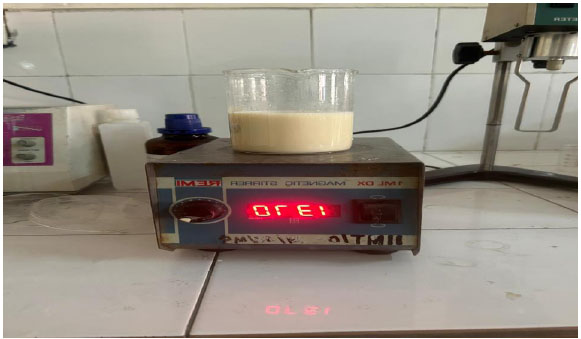
Selected drug-loaded nanoemulsion.
The formulations listed in Table 1 were subjected to systematic screening during formulation development. Formulations were excluded when they showed inadequate emulsification, phase separation, poor physical appearance, insufficient nanoemulsion region in the pseudo-ternary phase diagram, or undesirable formulation characteristics. The selected formulation was required to form a physically stable and homogeneous nanoemulsion with suitable globule size and polydispersity characteristics. Based on these screening criteria, formulation A1 was selected for further optimization and characterization.
2.4. Preparation of Drug-Loaded Nanoemulgel (DLNE)
The gelling ingredient, Carbopol 940, was used in varying concentrations to produce nanoemulgel formulations (1.5% w/v). To ensure complete swelling of the gelling agent, Carbopol 940 was dissolved in distilled water and continuously stirred to generate the gel base [26]. To get rid of air bubbles, the mixture was sonicated for fifteen minutes. AMP-90 was then added as a neutralizing agent and sodium benzoate as a preservative to create a homogeneous gel dispersion. The modified NE was gradually added to the gel base while being gently agitated to produce the final DLNE gel (Fig. 2). A NE-free control gel was made using the same procedure.
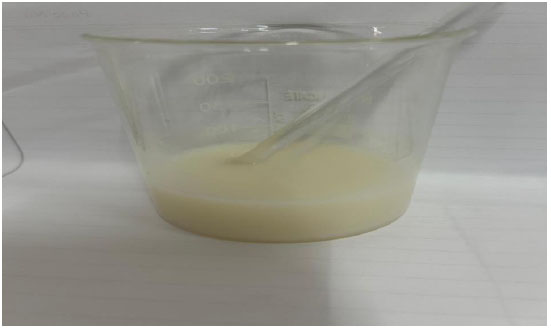
Colchicine and N. sativa-loaded nanoemulgel.
2.5. In Vivo Animal Studies
2.5.1. Study Design
This was an in vivo study in which an experiment was conducted to test the anti-inflammatory potential of colchicine and Nigella sativa nanoemulgel. There were a total of 36 healthy albino Wistar rats. The animals were Male, 8-10 weeks old, weighing 200-220 g. The animals were procured from the CPCSEA-registered animal house of IIMT University, Meerut, India. The animals were kept under standard laboratory conditions at a temperature of 25 ± 2°C, relative humidity 50-60%, and a 12-h day-night cycle. The animals were randomly divided into six groups, with six animals in each group. The study was done over a period of six weeks, i.e., March 2025 - April 2025. The six-week period refers to the overall animal-study period, including animal acclimatization, experimental preparation, treatment administration, and scheduled outcome assessments, and does not represent the duration of carrageenan-induced inflammation. For the carrageenan-induced paw edema experiment, paw thickness was monitored at 1, 2, 3, 4, 5, and 12 h following carrageenan administration. The 12-h endpoint was selected to assess the persistence of the anti-inflammatory effect and to determine whether the topical nanoemulgel maintained activity beyond the early phase of carrageenan-induced edema.
The animals received oral colchicine solution at a dose of 1 mg/kg. Body weight: marketed colchicine gel at a dose of 1% w/w topically; colchicine nanoemulgel at a dose of 1 mg/kg. Body weight: Nigella sativa nanoemulgel at a dose of 1% oil topically, combination nanoemulgel at a dose of 1 mg/kg. Body weight + 1% Nigella sativa oil topically, and gel base was included as a control.
2.5.2. Animals
The albino Wistar rats weighing 200-220 g, albino, and genetically uniform, were used to test the anti-inflammatory potential of the formulated Colchicine and N. sativa NEG product developed, compared to the marketed Colchicine gel product. The rats were housed in propylene cages, 4 rats per cage, with free access to food and water. The cages were maintained at a temperature of 25 ± 2°C and 55 ± 5% relative humidity, and a 12-hour light-dark cycle. The animal study protocol was approved by the Institutional Animal Ethics Committee (IAEC) of IIMT University, Meerut, India (IAEC Reference No. IIMT/CMS/IAEC/2024-25/0009), during the IAEC meeting held on 13 September 2024. The IAEC approval sanctioned the use of 36 albino Wistar rats for a period of 12 months. The animal experiments conducted during March-April 2025 therefore fell within the approved 12-month study period. The study was conducted in accordance with the applicable CPCSEA guidelines. The rationale for choosing a 12-hour time point was to choose a time point that would allow evaluation of the sustained anti-inflammatory effect. The marketed colchicine gel product used for comparison (Group III) was ColchiGel 1% w/w, PharmaChem Ltd., India.
2.5.3. Sample Size
A total of 36 albino Wistar rats (6 animals per group) were used in the study. The sample size was selected based on similar previously reported in vivo anti-inflammatory studies and was considered adequate to ensure statistical power while minimizing animal use in accordance with the 3Rs principle [27, 28]. The experimental protocol, including the sample size, was reviewed and approved by the Institutional Animal Ethics Committee (IAEC) of IIMT University, Meerut, India (IAEC Reference No. IIMT/CMS/IAEC/2024-25/0009)
The study was performed and presented in accordance with the NC3Rs ARRIVE guidelines (2020). Animals were randomly assigned to experimental groups (n = 6 per group), and the number was based on previous studies that used the carrageenan-induced paw edema model. No animals were excluded, and all data points were included for analysis. The researchers who performed the outcome measures were blinded to the groups. Animals were monitored for health and welfare, and no unusual adverse effects were noted.”
All animal studies were performed according to the guidelines of the “Committee for the Purpose of Control and Supervision of Experiments on Animals” (CPCSEA), Government of India. Male rats only were used for this study to eliminate hormonal influences, as the estrous cycle may affect the outcome of inflammation.
2.6. In vivo Skin Irritation Test
A common in vivo skin irritation test was used to evaluate the combination nanoemulgel comprising Colchicine and N. sativa's capacity to cause cutaneous irritation. A determined amount of the formulation was administered topically to the shaved dorsal skin of the experimental animals (Fig. 3). At certain intervals, the application site was checked for any obvious responses, such as erythema (redness) or edema (swelling) [29, 30]. Ex vivo permeation studies utilized a Franz diffusion cell with a 20 mL receptor compartment and an effective diffusion area of 2.54 cm2. The spectrophotometric method for colchicine quantification was validated over 1-20 µg/mL, demonstrating excellent linearity (R2 = 0.9992), recovery (98.6-101.2%), and precision (RSD < 2%).”
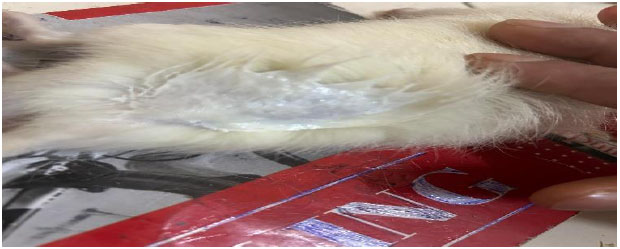
Application of Colchicine and N. sativa nanoemulgel on rat dorsal skin for in vivo irritation assessment.
2.7. Carrageenan-Induced Rat Paw Edema Test
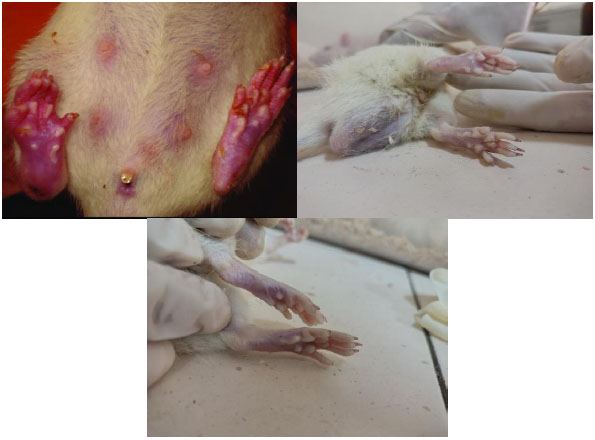
The carrageenan-induced rat hind paw edema technique was used to assess the anti-inflammatory properties of colchicine put into various formulations. Half an hour before the medication was applied, 0.1 mL of 1% carrageenan in saline was subcutaneously injected into the left hind paw to induce edema [31, 32]. Six groups of 36 male Wistar rats, each with six rats of a well-adjusted weight, were created. The experimental grouping and treatment design used in the study are illustrated in Fig. (4). Inflammation was induced in each group in the following ways:
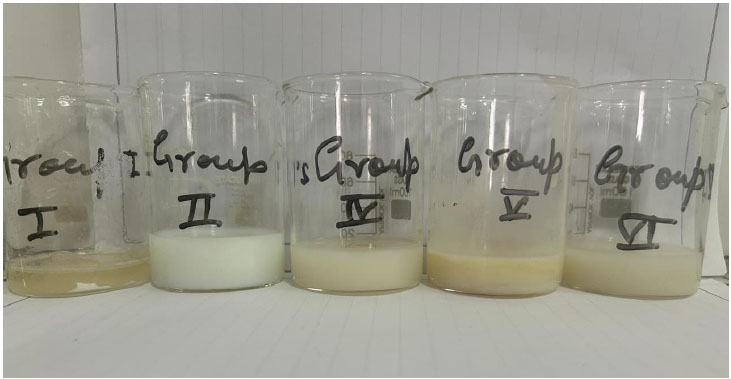
Visual comparison of different formulation groups used in the study. Group I: Control group treated with gel base only; Group II: Orally administered colchicine solution (1 mg/kg); Group IV: Colchicine-loaded nanoemulgel; Group V: N. sativa nanoemulgel; Group VI: Combination nanoemulgel containing both colchicine and N. sativa.
- Group I: Control group treated with gel base only.
- Group II: Treated orally with colchicine solution (1 mg/kg).
- Group III: Marketed Formulation Group
- Group IV: Colchicine nanoemulgel
- Group V: N. sativa nanoemulgel
- Group VI: Combination Colchicine + N. sativa nanoemulgel (1 mg/kg)
Paw thickness was measured at the same anatomical site using a calibrated digital vernier caliper. To minimize measurement variability, the same operator performed all measurements using a standardized measurement position and consistent application of the caliper jaws without excessive compression of the paw. Measurements were performed in triplicate at each time point, and the mean value was used for statistical analysis. The caliper was checked for zero error and calibration before measurements. Paw thickness was recorded in millimeters, and changes in paw thickness were expressed relative to the baseline measurement. The inflammatory reaction was calculated by assessing the changes in paw thickness using a digital caliper. The percentage of paw swelling was calculated using Equation (1), based on changes in paw thickness relative to the baseline measurement.
% Swelling = ((Vt − V0)/V0) × 100
where V0 symbolizes the thickness of the injected rat hind paw at zero time and Vt denotes the thickness after 1, 2, 3, 4, 5, and 12 hours of carrageenan injection [33]. Paw thickness was measured at 1, 2, 3, 4, 5, and 12 h after carrageenan injection. Measurements through 5 h captured the acute edema response, whereas the 12-h measurement was included to assess the persistence of the treatment effect beyond the early peak-response period.
The percentage inhibition of paw edema was calculated relative to the control group using Equation (2).

2.8. Ex vivo Skin Permeability and Deposition
An ex vivo study of skin permeation was conducted using rat abdominal skin obtained from male Wistar rats weighing 200-220 g, according to the method reported earlier, which has been slightly modified [reference no: IIMTU/CMS/Pharm/23-24/286]. Before use, the excised rat abdominal skin samples were visually inspected to ensure that they were intact and free from any visible damage, lesions, abrasions, or other abnormalities. Only skin samples with a normal and intact appearance were used for the ex vivo permeation study. Hair from the abdominal region of the rat was shaved, and the subcutaneous fat layer beneath the skin was gently removed using cotton swabs dipped in isopropyl alcohol. The excised rat skin samples were then rinsed thoroughly in phosphate buffer solution (PBS) at pH 7.4, followed by stabilization in PBS solution for 4 hours at room temperature before the permeation study. The treated rat skin samples were then mounted on the open end of a glass tube, which has an internal diameter of approximately 2 cm, ensuring the stratum corneum layer faced the donor compartment, as depicted in Fig. (5). The receptor compartment, which consists of a glass beaker containing 100 mL of PBS, was maintained at 37±0.5°C in a shaking water bath operating at 50 rpm [34]. A fixed amount of each formulation of Colchicine nanoemulgel, N. sativa nanoemulgel, Combination nanoemulgel, and gel base was applied to the donor compartment. At fixed time intervals of 0.5, 1, 2, 4, 6, 8, 12, and 24 hours, an aliquot of 5ml was collected from the receptor compartment and replaced with fresh PBS. The drug content was determined spectrophotometrically at λ_max 285nm for Colchicine. The ex vivo permeation study was performed using excised rat abdominal skin mounted on Franz diffusion cells. The tested donor formulations included gel base, colchicine oral solution, colchicine nanoemulgel, N. sativa nanoemulgel, and combination nanoemulgel.
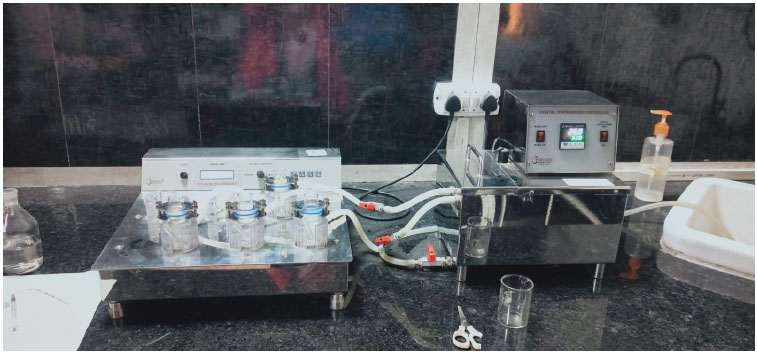
Ex vivo skin permeation study using Franz diffusion cells mounted with excised rat skin to evaluate dermal diffusion of the formulated nanoemulgel under controlled temperature conditions.
The steady-state permeation flux (J) was calculated using Equation (3), while the apparent permeability coefficient (Papp) was determined using Equation (4), based on Fick's first law of diffusion [35]:
J = dQ / (A × t)
Papp = J / C0
Where dQ is the drug amount diffused, A is the effective diffusion area, t is time, and C0 is the initial drug concentration in the donor compartment. After 24 hours, the skin samples were thoroughly washed, dried, and homogenized in methanol to estimate the drug deposition within the skin. The amount of colchicine retained in the skin was determined using UV-Vi spectrophotometry.
2.9. Cytokine Profiling
Blood samples from all experimental groups were obtained through retro-orbital plexus puncture at 4 hours post-carrageenan injection. The serum was separated and examined for pro-inflammatory cytokines, including TNF-α, IL-1β, and IL-6, using commercially available ELISA kits specific for rats (e.g., Thermo Fisher Scientific, USA). The ELISA protocol was adhered to, and the absorbance was read at 450 nm using a microplate reader (BioTek Instruments, USA). The results were obtained in triplicate, and the values were reported in pg/mL [36].
2.10. Histopathological Examination
At the end of the experiment, rat hind paw tissues were excised, fixed in 10% buffered formalin for 48 hours, and processed for paraffin embedding. Sections (5 μm) were stained with Hematoxylin and Eosin (H&E) and examined under a light microscope (Olympus BX53, Japan) for histopathological changes such as inflammatory cell infiltration, edema, and vascular congestion. Images were captured for comparative analysis across groups [37].
2.11. Stability Studies
Stability studies were performed for the combination nanoemulgel stored under two conditions: refrigerated (4 ± 2°C) and room temperature (25 ± 2°C). Samples were withdrawn at 0, 1, 2, and 3 months to assess:
- Globule size via dynamic light scattering
- pH measurement using a calibrated pH meter
- Viscosity using a Brookfield viscometer
- Drug content via UV-Visible spectroscopy. Visual inspection was conducted for any phase separation, precipitation, or color change.
2.12. Dose Optimization Study
To determine the optimum topical dose of colchicine, nanoemulgel formulations containing different concentrations of colchicine at 0.5, 1.0, and 2.0 mg/kg body weight were prepared. The anti-inflammatory activity was carried out using the carrageenan-induced paw edema method, as described above. The percentage inhibition of paw edema and signs of dermal irritation were recorded to determine the dose with maximum efficacy and minimum toxicity [38]. The dose-ranging study was performed using the colchicine-loaded nanoemulgel alone at 0.5, 1.0, and 2.0 mg/kg, with 2.0 mg/kg producing the highest inhibition of paw edema. However, the subsequent combination study was conducted using 1.0 mg/kg colchicine with 1% N. sativa oil. The 1.0 mg/kg colchicine dose was selected for the combination formulation to evaluate whether the addition of N. sativa oil could enhance the anti-inflammatory response at a lower colchicine dose, consistent with the intended dose-sparing objective of the combination approach. Therefore, the 2.0 mg/kg colchicine dose was not included as an additional combination group in the present animal experiment. A systematic dose-ranging study of the combination formulation, including different colchicine doses in the presence of N. sativa oil, was beyond the scope of the present study and should be investigated in future studies.
2.13. Statistical Analysis
All data were expressed as mean ± standard deviation (SD). Statistical analysis was performed using one-way analysis of variance (ANOVA), followed by Fisher’s least significant difference (LSD) post-hoc test for pairwise comparisons among the experimental groups. The LSD procedure was selected for the planned pairwise comparisons to identify differences between specific treatment groups following a significant overall ANOVA. Statistical analysis was performed using IBM SPSS Statistics version 14.0 (IBM Corporation, Armonk, NY, USA). Differences were considered statistically significant at p < 0.05.”
3. RESULTS
3.1. FT-IR
The compatibility of the drug and excipients was investigated using Fourier Transform Infrared Spectroscopy (FT-IR). The FT-IR spectra for the pure colchicine and Nigella sativa oil showed characteristic peaks for the different functional groups such as N-H stretching, C=O stretching, and C- H vibrations. The characteristic FT-IR spectra for the pure form of colchicine, showing the major peaks for the different functional groups, are presented in Fig. (6). The prominent FT-IR peaks and corresponding functional groups of colchicine are summarized in Table 2 [39]. The FT-IR spectra for Nigella sativa oil are presented in Fig. (7). The characteristic FT-IR peaks of Nigella sativa oil are summarized in Table 3 [40]. There was no shifting or disappearance of the characteristic peaks for the different functional groups in the physical mixture and nanoemulgel formulation, indicating that there was no interaction between the drug and excipients. The FT-IR spectra for the mixture containing colchicine, Nigella sativa oil, and Smix (containing Tween-20 and PEG-200) are presented in Fig. (8), indicating that the drug is compatible with the excipients used for the nanoemulgel formulation.
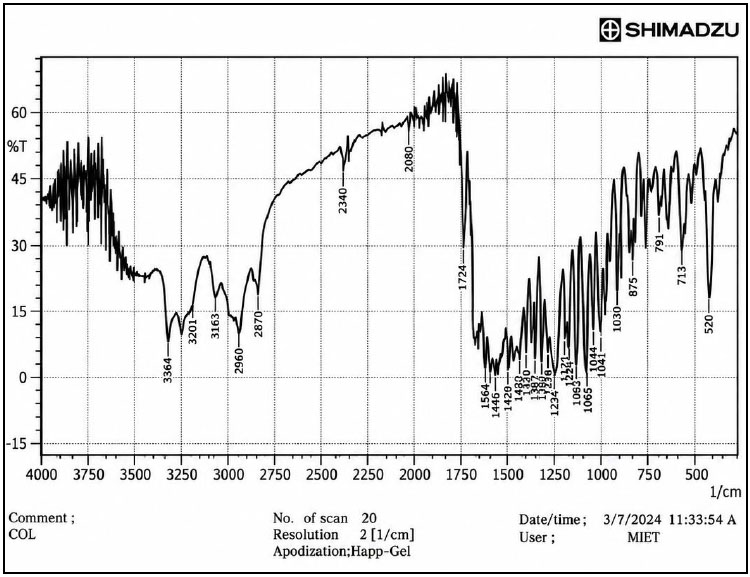
FTIR spectra of colchicine.
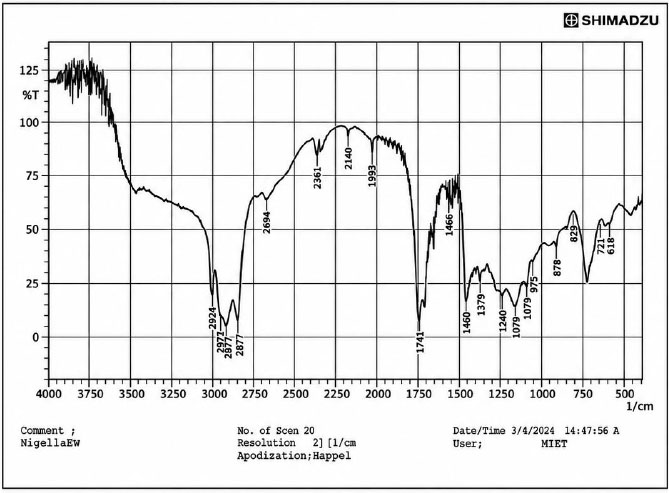
FTIR spectra of Nigella sativa.
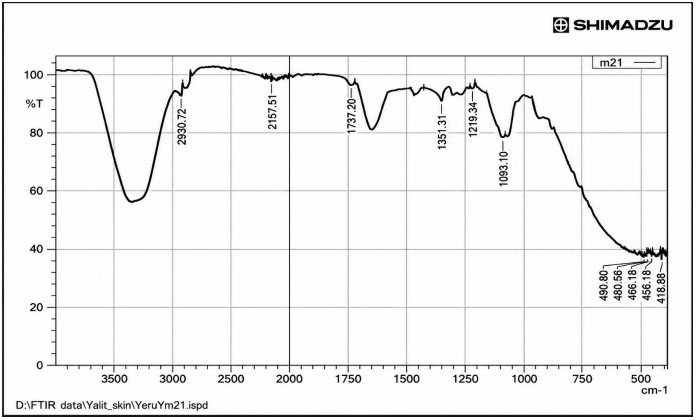
FTIR spectrum of Drug and Nigella sativa with Smix (Tween - 20 and PEG-200).
| S. No | Observed Peaks of Drug Sample (cm-1) | Peaks of Pure (cm-1) | Name of Group |
|---|---|---|---|
| 1. | 1739.67 | 1732 | C=O |
| 2. | 2934.49 | 2935 | C-H stretch (Aliphatic) |
| 3. | 1250.75 | 1251 | C-H (Aromatic) |
| 4. | 1487.01 | 1487 | C-C stretch in ring |
| 5. | 1322.11 | 1323 | C-N (Stretch) |
| 6. | 1283.54 | 1282 | C-O-C |
| 7. | 3314.44 | 3246 | N-H stretch |
| S. No. | Observed Peaks of Drug Sample (cm-1) | Peaks of Pure (cm-1) | Name of Group |
|---|---|---|---|
| 1. | 3007.78 | 3006 | C-H stretching |
| 2. | 1462,91 | 1402.25 | C=C aromatic stretching |
| 3. | 2852.52 | 2853 | C-H aliphatic bending |
| 4. | 722.29 | 678.94 | R-X- stretching |
| 5. | 1057.88 | 1033.85 | -NH2 (Aliphatic amines) stretching |
3.2. In vivo Skin Irritation Test
The combination nanoemulgel (Colchicine + N. sativa) was applied topically on the shaved dorsal skin of Wistar rats and observed for 7 days. No signs of erythema, edema, or irritation were observed, and all animals scored “0” on the irritation scale (Fig. 9). These findings confirm the formulation’s excellent dermal compatibility and suitability for topical application [41-43].
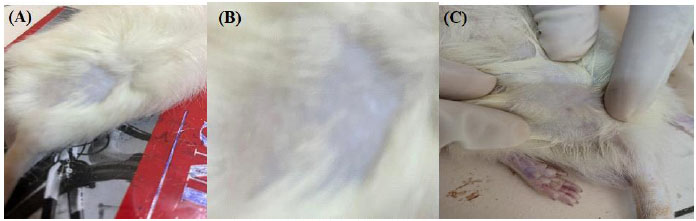
A-C: In vivo skin irritation assessment in Wistar rats. (A) Shaved dorsal skin prior to application of nanoemulgel, showing intact skin. (B) Close-up of untreated shaved skin area, baseline condition. (C) Skin site after 7 days of daily application of colchicine + N. sativa nanoemulgel, showing no erythema, edema, or irritation. X-axis: observation time; Y-axis: qualitative scoring of irritation (0 = none).
3.3. Anti-Inflammatory Testing: Carrageenan-Induced Rat Paw Edema Model
The anti-inflammatory efficacy of various formulations was assessed using the carrageenan-induced rat paw edema model. The progression of paw swelling over time revealed distinct differences in therapeutic response among the experimental groups [44]. For the control group (Group I), where only the gel base was used without any active ingredient, the maximum edema was observed after 4 hours, reaching 97.5 ± 3.4%. This confirms the high level of inflammation and the lack of anti-inflammatory activity for the gel base. The administration of colchicine orally (Group II) showed a significant decrease in the edema, reaching a maximum edema of 66.2 ± 2.9%. The results obtained for this group are statistically significant (p < 0.05) compared to the results for the control group, indicating the anti-inflammatory potential of colchicine. The results for the marketed formulation (Group III) showed a slightly higher anti-inflammatory potential, with a maximum edema reaching 58.4 ± 3.1%. The results are statistically significant (p < 0.042) compared to those for the control group, indicating an improvement in the therapeutic potential through topical application, although still limited to conventional permeation. The results for the colchicine nanoemulgel (Group IV) showed a high anti-inflammatory potential, with a maximum edema reaching 45.7 ± 2.5%. The results are statistically significant (p < 0.01) compared to those for the control, oral, and marketed formulation groups, indicating a high level of anti-inflammatory potential through improved skin permeation (Table 4). The percentage decrease in paw swelling was comparable to that obtained by the N. sativa nanoemulgel, and this group reached 41.3 ± 2.2% (p < 0.01) (Fig. 10). This result validates the anti-inflammatory activity associated with N. sativa oil and its potential use as a bioactive ingredient in nanoemulgel formulations. The N. sativa oil might also play a part in skin permeability, thereby increasing drug bioavailability. The most remarkable result was obtained from the combination nanoemulgel (Group VI), in which both colchicine and N. sativa oil were incorporated into the nanoemulgel matrix (Fig. 11). This group recorded the minimum percentage of paw swelling, i.e., 28.6 ± 1.9% at 4 hours. The combination nanoemulgel produced 71.4% inhibition of paw edema, whereas the N. sativa nanoemulgel and colchicine nanoemulgel produced 41.3% and 45.7% inhibition, respectively. Using the Bliss independence model, the expected additive inhibition for the combination was 68.14% [E_A + E_B − (E_A × E_B)]. The observed inhibition of 71.4% was 3.26 percentage points higher than the predicted additive effect. Thus, the combination demonstrated a greater-than-expected anti-inflammatory effect; however, because a formal combination index or isobolographic analysis was not performed, this finding is considered supportive of potential synergism rather than definitive proof of synergism. These results strongly suggest that the nanoemulgel system, especially when using the combination of colchicine and N. sativa oil, has better anti-inflammatory activity than conventional oral and topical formulations. The results support the role of nanoemulgel technology in enhancing topical drug delivery, which has therapeutic promise in the treatment of inflammation.
Paw edema progression in carrageenan-induced rats. X-axis: time (h), Y-axis: % swelling. The combination nanoemulgel group showed the lowest swelling.
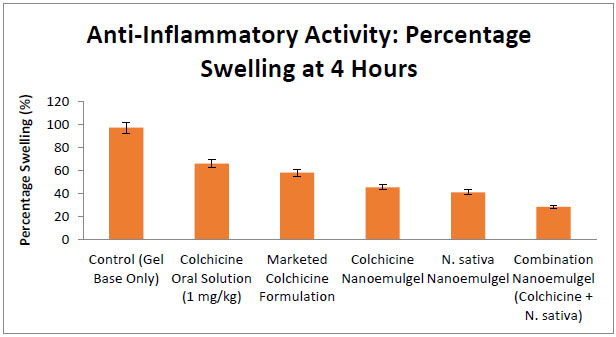
Group-wise percentage paw swelling at 4 h post-carrageenan injection. Lower swelling values represent higher anti-inflammatory activity.
| Group | Treatment | % Swelling at 4 h (Mean ± SD) | Statistical Significance vs Control | Remarks |
|---|---|---|---|---|
| I | Control (Gel Base Only) | 97.5 ± 3.4% | - | No anti-inflammatory effect observed |
| II | Colchicine Oral Solution (1 mg/kg) | 66.2 ± 2.9% | p < 0.05 | Moderate effect via systemic route |
| III | Marketed Colchicine Formulation | 58.4 ± 3.1% | p < 0.042 | Better topical efficacy than oral solution |
| IV | Colchicine Nanoemulgel | 45.7 ± 2.5% | p < 0.01 | Enhanced local effect due to improved permeation |
| V | N. sativa Nanoemulgel | 41.3 ± 2.2% | p < 0.01 | Strong anti-inflammatory effect from herbal oil |
| VI | Combination Nanoemulgel (Colchicine + N. sativa) | 28.6 ± 1.9% | p < 0.001 | Synergistic effect with superior dermal delivery and efficacy |
The anti-inflammatory potential of the developed formulations was checked using the carrageenan-induced paw edema test. The percentage reduction in paw edema over time is represented in Fig. (12), where it is clearly indicated that combination nanoemulgel formulations have suppressed inflammation significantly compared to other formulations.
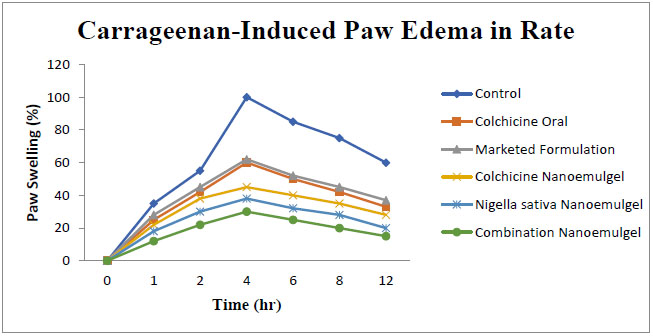
Time-dependent % reduction of paw swelling. Combination nanoemulgel suppressed inflammation more effectively than other treatments.
3.4. Ex vivo Skin Permeability and Deposition
The ex vivo permeation profile showed a significant increase in the cumulative amount of the drug permeated and the flux of the formulations containing the Colchicine + N. sativa combination. This was due to the synergistic effect of the presence of the oil of N. sativa, which is a known permeation enhancer. This resulted in a significant enhancement of the permeation of colchicine and its deposition into the skin. The ex vivo permeation study showed that the combination of the nanoemulgel formulations containing colchicine and oil of N. sativa resulted in the highest cumulative permeation and flux of the formulations into the skin (Fig. 13). This is consistent with the findings of previous studies on the use of the nanoemulgel system in the enhancement of the permeation of the drug into the skin due to the reduction of the size of the globules and the presence of natural permeation enhancers [45-47]. The superior performance of N. sativa oil as a co-active agent and permeation enhancer has also been documented in topical systems, attributed to its high thymoquinone content and fatty acid profile, which transiently disrupts the stratum corneum lipid matrix [48-50]. The enhanced deposition of colchicine within the skin matrix further supports the sustained reservoir effect of the nanoemulgel system, consistent with similar studies utilizing jojoba oil or olive oil-based nano-formulations [51]. Thus, this formulation strategy represents a promising alternative for topical anti-inflammatory therapy with improved pharmacokinetic and pharmacodynamic outcomes. The ex vivo permeation study indicated a cumulative permeation of 12.4 µg/cm2 for the gel base alone, implying that colchicine has some inherent permeability through rat skin even without the aid of permeation enhancers (Table 5). Even though this is low for nanoemulgel formulations, this finding is in agreement with literature indicating that, being a small, lipophilic alkaloid with a molecular weight of ~399.4 g/mol, it can permeate to some extent through the stratum corneum. Similar studies have been done on non-enhanced gel formulations, where baseline permeation rates between 8-15 µg/cm2 have been reported for colchicine and other small molecular weight anti-inflammatory drugs over a period of 24 hours. The presence of the drug in the receptor compartment for the control gel base is thus in agreement with its physicochemical properties, though its flux was significantly enhanced in nanoemulgel formulations.
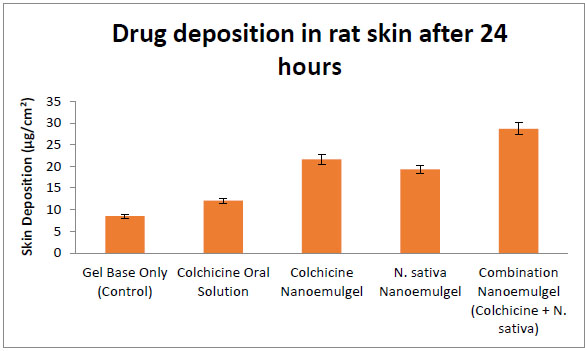
Skin deposition of colchicine after 24 h. The combination nanoemulgel showed the highest retention (µg/cm2).
| Formulation | Cumulative Permeation (µg/cm2) | Flux (J, µg/cm2/h) | Papp (×10−5 cm/s) | Skin Deposition (µg/cm2) |
|---|---|---|---|---|
| Gel Base Only (Control) | 12.4 | 0.52 | 0.78 | 8.5 |
| Colchicine Oral Solution | 24.8 | 0.94 | 1.4 | 12.1 |
| Colchicine Nanoemulgel | 46.2 | 1.87 | 2.79 | 21.6 |
| N. sativa Nanoemulgel | 41.8 | 1.73 | 2.52 | 19.3 |
| Combination Nanoemulgel (Colchicine + N. sativa) | 62.9 | 2.53 | 3.76 | 28.7 |
The cumulative permeation profiles of different formulations are shown in Fig. (13). The combination na- noemulgel exhibited significantly higher drug permeation than single-drug nanoemulgels and the control gel base.
3.5. Cytokine Profiling
Serum levels of TNF-α, IL-1β, and IL-6 were significantly reduced in combination nanoemulgel treatment compared with control and individual treatments (p < 0.01). TNF-α levels decreased significantly from 112.4 ± 5.2 pg/mL in control treatment to 48.9 ± 3.1 pg/mL in combination treatment. Similar trends have been observed for IL-1β and IL-6, thus confirming synergistic anti-inflammatory activity at molecular levels (Table 6). Pro-inflammatory cytokines like TNF-α, IL-1β, and IL-6 levels in serum collected after different treatment regimens at 4 hours post-injection of carrageenan. Data are represented as mean ± SD for n = 6. Combination nanoemulgel treatment significantly reduced levels of all three cytokines when compared to all other treatment regimens (p < 0.01) (Table 6 and Fig. 14).
| Group | TNF-α (pg/mL) | IL-1β (pg/mL) | IL-6 (pg/mL) |
|---|---|---|---|
| Control (Gel Base Only) | 112.4 ± 5.2 | 85.6 ± 4.3 | 93.2 ± 4.9 |
| Colchicine Oral Solution (1 mg/kg) | 78.9 ± 3.8 | 58.2 ± 2.7 | 62.4 ± 3.2 |
| Marketed Colchicine Formulation | 69.1 ± 3.5 | 51.7 ± 2.6 | 55.8 ± 2.9 |
| Colchicine Nanoemulgel | 58.6 ± 3.1 | 43.2 ± 2.3 | 46.5 ± 2.5 |
| Nigella sativa Nanoemulgel | 54.2 ± 2.9 | 39.7 ± 2.1 | 42.8 ± 2.3 |
| Combination Nanoemulgel | 48.9 ± 3.1 | 31.6 ± 1.8 | 34.9 ± 2.1 |
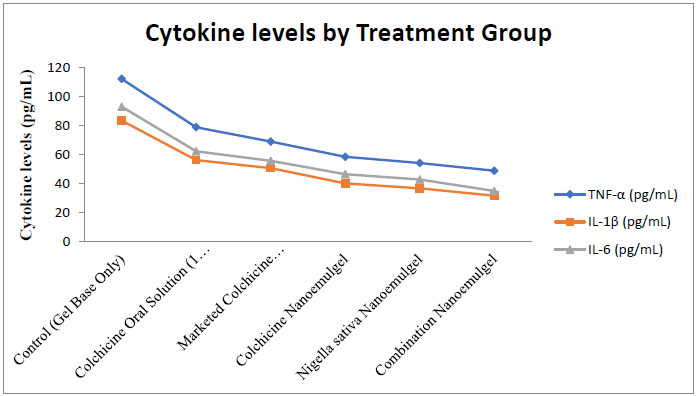
Combination Nanoemulgel significantly reduces pro-inflammatory cytokines compared to other treatments.
3.6. Histopathological Examination
Histopathology analysis of the tissue sections of the paws showed a high level of inflammation, edema, and vascular congestion in the control group. In contrast, the combination nanoemulgel showed low levels of inflammation and edema, indicating a high level of anti-inflammatory activity. The histopathological findings are presented in Fig. (15). Representative histology images (Hematoxylin and Eosin staining) of rat paw tissue after 4 hours of carrageenan injection. (A) Control group showing high levels of inflammation, edema, and vascular congestion. (B) Colchicine nanoemulgel group showing moderate levels of anti-inflammatory activity. (C) Nigella sativa nanoemulgel group showing mild inflammation and low levels of edema. (D) Combination nanoemulgel group showing low levels of inflammation and high levels of anti-inflammatory activity. The scale bar is 50 μm. Histopathological examination at the experimental endpoint was used to assess tissue-level changes, including inflammatory cell infiltration, edema, and vascular congestion. The control group showed marked inflammation, edema, and vascular congestion, whereas the combination nanoemulgel-treated group showed comparatively lower inflammatory cell infiltration and edema, with no marked tissue damage observed.
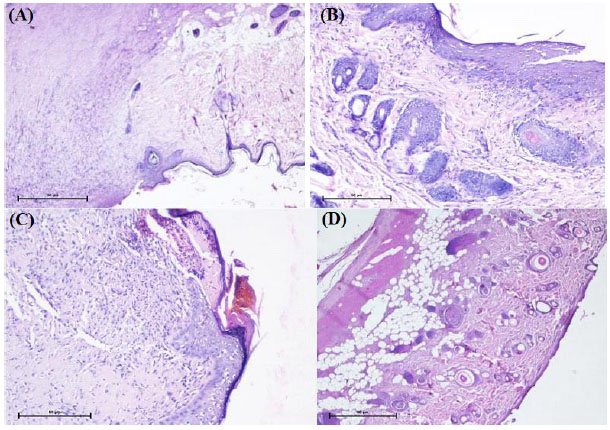
Histopathology analysis of the tissue sections of the paws showed that there was a high level of inflammation, edema, and vascular congestion in the control group. On the other hand, the combination nanoemulgel showed low levels of inflammation and edema, indicating a high level of anti-inflammatory activity.
3.7. Stability Studies
The physical and chemical stability of the nanoemulgel was confirmed, as there was no significant change in globule size, i.e., from 152.6 ± 3.1 to 155.8 ± 3.4 nm, PDI from 0.40 ± 0.05 to 0.43 ± 0.04, zeta potential from +17.2 ± 1.3 to +16.5 ± 1.3 mV, pH between 6.60 and 6.65, and drug content, which remained above 98% of the initial value during the 3-month storage period. The optimized formulation exhibited an initial PDI of 0.40 ± 0.05 and zeta potential of +17.2 ± 1.3 mV. These parameters remained relatively unchanged throughout the stability study. No phase separation or precipitation was observed, indicating good physical and chemical stability of the optimized combination nanoemulgel (Table 7).
| Parameter | Initial (0 Months) | 1 Month | 2 Months | 3 Months |
|---|---|---|---|---|
| Globule size (nm) | 152.6 ± 3.1 | 153.2 ± 3.3 | 154.4 ± 3.2 | 155.8 ± 3.4 |
| PDI | 0.40 ± 0.05 | 0.41 ± 0.04 | 0.42 ± 0.05 | 0.43 ± 0.04 |
| Zeta potential (mV) | +17.2 ± 1.3 | +16.9 ± 1.2 | +16.7 ± 1.4 | +16.5 ± 1.3 |
| pH | 6.65 ± 0.02 | 6.63 ± 0.02 | 6.61 ± 0.03 | 6.60 ± 0.03 |
| Drug content (%) | 99.2 ± 0.8 | 98.7 ± 0.9 | 98.4 ± 0.7 | 98.1 ± 0.6 |
| Appearance | Clear gel, no separation | No change | No change | No change |
3.8. Dose Optimization Study
The anti-inflammatory effect of colchicine nanoemulgel was dose-dependent, as the dose of 2 mg/kg caused the most pronounced effect in the reduction of paw edema, i.e., 82.7%, followed by the dose of 1 mg/kg, which caused 69.4%, and the dose of 0.5 mg/kg, which caused 52.1%. The differences in the effects of the tested doses were statistically significant, with p < 0.001 for the 1 mg/kg vs. 2 mg/kg comparison, p < 0.01 for the 0.5 mg/kg vs. 1 mg/kg comparison, and p < 0.05 for the 0.5 mg/kg vs. 2 mg/kg comparison, confirming the dose-dependent anti-inflammatory effect of the tested formulation (Table 8, Fig. 16).
| Dose (mg/kg) | % Reduction in Paw Edema at 4 h (Mean ± SD) |
|---|---|
| 0.5 | 52.1±2.4% |
| 1 | 69.4± 2.7% |
| 2 | 82.7±2.1% |
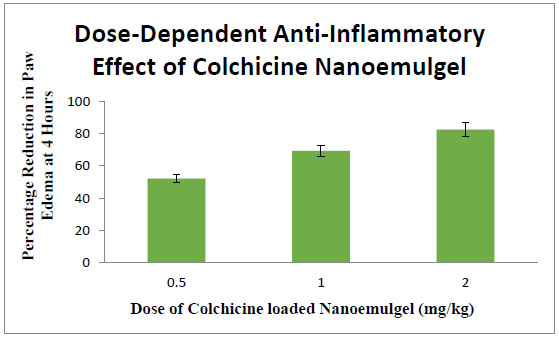
Dose-dependent anti-inflammatory effect of colchicine nanoemulgel. X-axis: dose (mg/kg), Y-axis: % reduction in paw edema. Maximum effect at 2 mg/kg.
4. DISCUSSION
The findings of this study have established the enhanced anti-inflammatory potential and permeation characteristics of colchicine and N. sativa oil when formulated in a nanoemulgel. The combination nanoemulgel was able to significantly reduce paw edema in the carrageenan-induced rat paw edema model when compared to conventional formulations and individual nanoemulgels. The synergistic effect of combining colchicine and N. sativa oil can be attributed not only to the individual pharmacological activity of the drugs but also to the enhanced permeation characteristics of the nanoemulgel. The combination nanoemulgel demonstrated a greater-than-expected anti-inflammatory effect. Importantly, the dose-ranging experiment was performed with the colchicine nanoemulgel alone and not with the colchicine-N. sativa combination. Although 2 mg/kg colchicine produced the greatest inhibition in the individual nanoemulgel dose-ranging study, the combination formulation was evaluated only at 1 mg/kg colchicine with 1% N. sativa oil. Thus, the present data do not establish whether increasing the colchicine dose to 2 mg/kg within the combination formulation would provide additional anti-inflammatory benefit or alter the magnitude of the observed interaction. A systematic dose-ranging study of the combination, incorporating multiple colchicine doses and appropriate N. sativa oil controls, is warranted to determine the optimal combination dose and to substantiate the proposed dose-sparing effect. The observed inhibition (71.4%) exceeded the Bliss-predicted additive inhibition (68.14%) by 3.26 percentage points, supporting a potential synergistic interaction between colchicine and N. sativa oil. Nevertheless, definitive pharmacological synergy would require dedicated combination-effect analysis, such as a combination index or isobolographic approach.
The ex vivo permeation study correlates with the efficacy study of the combination nanoemulgel, where it was observed to have the highest cumulative permeation, flux, and permeability coefficient, along with significant deposition in the skin. These findings clearly indicate the enhanced dermal delivery potential of the nanoemulgel system over oral administration of colchicine or conventional gel formulations. Literature has established the potential of natural oils such as N. sativa and jojoba oil in terms of enhanced skin penetration and therapeutic efficacy [52-54]. Our results align well with such reports, further strengthening the evidence of natural bio-enhancers in advanced drug delivery systems [55-58]. The data support that the lipid-based nature of N. sativa oil, rich in thymoquinone and fatty acids, contributes to improved permeation across the stratum corneum and sustained drug release [59-62]. The decrease in paw swelling in vivo in the combination nanoemulgel formulation was statistically significant when compared to the other groups (p < 0.05), which indicates a strong synergistic effect of the anti-inflammatory agent, along with the dose-sparing effect of colchicine, which reduces the systemic toxicity of the drug. The results are very significant, especially in the clinical applications of the formulation in the treatment of chronic inflammatory conditions, including gout, rheumatoid arthritis, and dermal inflammation. The synergistic effect of the formulation, which combines colchicine and thymoquinone, may be attributed to their complementary pharmacological actions, including colchicine-mediated disruption of microtubule dynamics and thymoquinone-mediated modulation of inflammatory signaling pathways such as NF-κB. In addition, the permeation-enhancing properties of N. sativa oil may further contribute to the improved dermal delivery of colchicine. The permeation-enhancing effect of N. sativa oil may be linked to its high linoleic acid content, which disrupts stratum corneum lipids. Our formulation achieved a droplet size of 152.6 ± 3.1 nm, favoring enhanced skin penetration. Limitations of this study include the absence of long-term stability data and histopathological confirmation of reduced inflammation, which should be addressed in future research.” The originality of the study stems from the co-administration of colchicine and NS oil in a single nanoemulgel system. Previous studies have shown the use of the nanoemulgel system in the delivery of anti-inflammatory compounds. However, the use of the combination of the aforementioned compounds and the synergistic potential of NS oil as a therapeutic and permeation enhancer of colchicine has not been documented.
One of the drawbacks of the study is the fact that it was conducted on an acute inflammation model. Chronic inflammatory diseases like gout and rheumatoid arthritis are characterized by long-term immune system activation and tissue remodeling, which cannot be evaluated using the carrageenan-induced paw edema model. Further studies are required to assess the potential of the combination of the compounds in the treatment of chronic inflammatory diseases.
4.1. Limitation of Cytokine Assessment
Cytokine profiling in the present study was performed at a single time point (4 h after carrageenan injection). Although this time point provided an indication of the early inflammatory response, assessment at later time points, such as 12 and 24 h, would provide a more comprehensive understanding of the persistence and sustained modulation of pro-inflammatory cytokines following treatment. Future studies incorporating multiple cytokine sampling time points are therefore warranted to establish the temporal profile and sustained cytokine-modulatory effects of the combination nanoemulgel.
CONCLUSION
This study formulated a nanoemulgel with a novel co-loading approach for colchicine and Nigella sativa oil, which was observed to have synergistic anti-inflammatory activity and enhanced permeability for dermal application. It was inferred that the incorporation of Nigella sativa oil can enhance the efficacy and permeability of colchicine for topical application. The incorporation of N. sativa oil may allow effective anti-inflammatory activity at a lower colchicine dose; however, systematic dose-ranging studies of the combination formulation are required to confirm the optimal dose and establish the extent of any dose-sparing effect. It is quite obvious that this study holds promise for the treatment of localized inflammatory conditions.
LIMITATIONS OF THE STUDY
Although the present study demonstrated promising anti-inflammatory activity and enhanced dermal permeation of the colchicine-*Nigella sativa* nanoemulgel, several methodological and experimental limitations should be acknowledged when interpreting the findings. The study was primarily based on a carrageenan-induced paw edema model, which is suitable for evaluating acute inflammatory responses but does not fully reproduce the complex mechanisms of gout, particularly monosodium urate crystal deposition and recurrent inflammatory episodes. Consequently, the observed anti-inflammatory efficacy cannot be directly extrapolated to chronic gout or other long-term inflammatory disorders. Furthermore, the experimental design included 36 male Wistar rats, with six animals per group. This relatively small sample size may limit the precision of treatment-effect estimates, while the exclusion of female animals restricts the generalizability of the findings across sexes.
An important limitation concerns the interpretation of pharmacological synergism. Although the combination nanoemulgel produced 71.4% inhibition of paw edema, exceeding the Bliss-predicted additive effect of 68.14%, the difference of 3.26 percentage points alone does not conclusively establish synergy. The absence of a formal combination-index or isobolographic analysis limits the strength of this interpretation. Additionally, dose optimization was performed using colchicine nanoemulgel alone, whereas the combination formulation was evaluated at a single colchicine dose of 1 mg/kg with 1% *N. sativa* oil. Therefore, the optimal combination dose and proposed dose-sparing effect remain unconfirmed. Cytokine measurements were also restricted to a single time point of 4 h, preventing comprehensive assessment of sustained inflammatory modulation.
The ex vivo permeation experiments employed rat skin, which differs from human skin in barrier properties and permeability characteristics, potentially affecting the clinical relevance of the observed drug flux and deposition. Moreover, increased skin permeation does not necessarily establish improved local drug availability without corresponding pharmacokinetic and tissue-distribution investigations. Although no visible dermal irritation was reported during the seven-day observation period, long-term dermal toxicity, systemic colchicine exposure, and repeated-dose safety were not comprehensively evaluated. The three-month stability assessment also provides limited information regarding the formulation's long-term pharmaceutical stability. Future investigations should therefore incorporate monosodium urate crystal-induced gout models, larger sex-inclusive experimental samples, systematic combination-dose studies, human skin permeation assessments, extended stability testing, and comprehensive pharmacokinetic and toxicological evaluations to establish the therapeutic and clinical potential of the developed nanoemulgel.
AUTHORS’ CONTRIBUTIONS
The authors confirm their contributions to the paper as follows: I.J.: Conceptualization, Methodology, Data collection, Investigation, Formal analysis, Writing - original draft, Visualization. Dr. J.H.: Co-supervision, Guidance in methodology, Critical review & editing. Dr. J.H.: Supervision, Project administration, Overall guidance.
LIST OF ABBREVIATIONS
| ANOVA | = Analysis of Variance |
| C0 | = Initial Drug Concentration |
| COX-2 | = Cyclooxygenase-2 |
| CPCSEA | = Committee for the Purpose of Control and Supervision of Experiments on Animals |
| DLNE | = Drug-Loaded Nanoemulgel |
| IAEC | = Institutional Animal Ethics Committee |
| J | = Flux |
| LSD | = Least Significant Difference |
| N. sativa | = Nigella sativa |
| NE | = Nanoemulsion |
| NEG | = Nanoemulgel |
| NF-κB | = Nuclear Factor kappa-light-chain-enhancer of activated B cells |
| O/W | = Oil-in-Water |
| Papp | = Apparent Permeability Coefficient |
| PBS | = Phosphate Buffered Saline |
| RH | = Relative Humidity |
| SD | = Standard Deviation |
| Smix | = Surfactant and Co-surfactant Mixture |
| TQ | = Thymoquinone |
| UV-Vis | = Ultraviolet-Visible (Spectrophotometry) |
ETHICAL APPROVAL AND CONSENT TO PARTICIPATE
All experimental protocols, including health monitoring and humane endpoints, were reviewed and approved by the Institutional Animal Ethics Committee (IAEC) of IIMT University, Meerut, India (IAEC Reference No. IIMT/CMS/IAEC/2024-25/0009).
HUMAN AND ANIMAL RIGHTS
This study adheres to internationally accepted standards for animal research, following the 3Rs principle. The ARRIVE guidelines were employed for reporting experiments involving live animals, promoting ethical research practices. All animal experiments were conducted as per the applicable CPCSEA guidelines.
AVAILABILITY OF DATA AND MATERIAL
The datasets generated and/or analyzed during the current study are available from the corresponding author upon reasonable request.
CONFLICT OF INTEREST
The authors declare no conflict of interest related to the present research work.
ACKNOWLEDGMENT
The authors sincerely acknowledge the valuable support and facilities provided by the Department of Pharmacy, IIMT University, Meerut, India. Special thanks are extended to the technical staff and laboratory personnel for their contributions during the experimental and analytical phases of this research.